Tuesday, March 25, 2014

Creativity And Commerce

There are a lot more professional musicians than you might think there are.  Musicians who make a fine living with nothing more than their instruments, their talents and their wits.  On top of that, there are thousands and thousands of creative professionals across the artistic spectrum who live comfortable lives with houses, cars, vacations, and all the fixings.  There are whole industries filled with people you have never heard of, that create, curate, design, and inform the aesthetics by which our world is based. On top of that, there are whole industries dedicated to teaching and nurturing creative skills, as well as industries that sell the supplies you'll need to begin creating.

Not surprisingly, few artists/craftsmen have chosen to live the "starving..." lifestyle.  Yet, many outsiders think that that's the only way you might make money doing artistic work.  Truthfully, it doesn't suit most people, and it's not very sustainable.  Even when you're not making money, you still need the money.  You require it on a daily basis, even if it's not yours.  Only the naive think that they are operating outside of a consumer's society.  Not a single person reading this can claim they are not consumers; invested in products, wholly reliant on corporations, living most days in service of commerce.  That's all of us in the Western world.  And it's not a bad thing, it just is the thing.

So, given that one must make money, when an artist enters the marketplace looking to "make a living with their art" they have a few choices:

  1. To follow their muse/passion exclusively and hope for the best in the long run.  A succeed-or-fail, no-compromise mentality.  This often means cutting all safety-nets, selling everything that's not nailed down to make ends meet, and jumping headlong the "starving" lifestyle.  The best will come out as the truest artists among us, and the rest (the vast majority) will fall by the wayside, get a day-job and, eventually, give it all up in favor of a more secure lifestyle.
  2. Adopt a "one foot in, one foot out" policy.  These folks will keep the day-job, stay in school, and pursue their art on a part-time basis.  This has a chance of working out, if the talent is there, but it would probably take a lot longer than the 'no-comprimise' style.  It's certainly a game of long-odds and requires a commitment of years, perhaps decades, to yield desirable results.  More often than not, however, there will be too many external pressures over this period of time to maintain a viable artistic side-career.  Eventually, a "serious pursuit" becomes a "hobby" and more lucrative career pursuits are sought out.  
  3. "Anything Goes."  This is where the majority of the creative folks described in the first paragraph live.  These may be people who were in a once-popular band, are jack-of-all-trades journeymen, or niche artisans with carefully marketable skills.  "Anything Goes" people suppose that they need to do a little bit of everything in their craft to carve out a living.  They have to turn themselves into a brand, and sell it wholesale to whoever is buying.  They may have to fall back on a day-job here and there, but aren't likely to stay there for long.  They play with whoever needs them (and is paying), they teach, they invent new sources of income, and are always on the lookout for the next thing, or just another thing to add on.  They may find themselves in the creative slums, or compromising everything they ever held dear; but they're in the game, and they're staying there.

As with all types of success, the first and most important step is picking which path you're going to take.  I have heard this countless times in countless conversations, and it seems to be a universal truth: You can walk any direction you wish, but you need to put 100% of yourself into it or you're going to fail.  The only right answer for achieving success in a creative field is the answer that is stated confidently and followed up with immediate action.  If you want to be renowned, and live as a true artist: start starving and go for it.  If you want to keep one foot out of the game, but still be in it, make sure that one foot is planted firmly and that you don't get distracted.  If you want to do a little bit of everything, make sure you're doing everything you possibly can, and not letting additional opportunities pass you by.   The creative world is a pretty big place, and there are many ways to succeed in it if you're willing to define what you want.  

Saturday, May 25, 2013

Replacing Band Members

One of the most frustrating thing about being in a band is when it comes time to replace a member.  Drummers, bassists, guitarists, vocalists are often looking for a musical change, undergoing life changes, or simply just getting fed up and quitting. Alternately, the rest of the band may have been conspiring for months to replace a member.  More often than not, it is be time-consuming, stressful, wasteful and disappointing.  As a replacement in probably a couple dozen bands (mostly short-term fill-ins, but often as a full member), I have noticed a few things about this process.

Let's just say right off the bat that replacing even one member is likely to kill the band completely.  Shake-ups within aspiring bands lead to a number of different interpersonal problems that are often insurmountable.  There are often disagreements about who would be a good fit, or even if there's a will to spend the months searching for and auditioning players.  Often, the loss of a key member is enough of a sign for one or more of the bandmates to call it quits before the ship starts really sinking.  Sometimes the loss is just too great; the person who left may have been the glue that held together the bands' personalities, or the stylistic force behind the scenes.  The band might not have even realized that the departing member was such a positive force until they're gone.  If you're starting to find a replacement, it's probably best to hammer through the core issues before you hold the first audition.  Be honest and forthright.  Make a plan for moving forward.  Set goals.  Don't let the confusion of this process infect new people.  They will sense this and know that the band is in trouble from the moment they enter the room for the first time.

Then, if you have chosen a new person there a whole new host of issues that may crop up in the following weeks and months of assimilation.  In my mind, there is a simple way to handle this transition.  Engage.  You must integrate a new member on good terms.  This is absolutely critical to moving forward.  A replacement member isn't just your new drummer/bassist/vocalist, he's a new part of the band.  He/she needs to have a stake in it from the very first rehearsal.  They are not your tool.  They are not just some replacement of some old guy that you really miss.  They are a human being with their own ideas on what they're trying to accomplish.  Find out what those ideas are.  Find out what they value in music, what they value in friendships, and what they define as "success."  If these values do not mesh with the rest of the bands', you've already made the wrong choice.  Before the first downbeat, the first riff, you've already wasted this time.

Once you've done your best to define them, and you've been absolutely honest with the band's definition, you're ready to start making music.  

Here's a thought that will be controversial right out of the gate: As soon as you can possibly do it, start ditching your old songs and writing new ones with the new member.  The old songs are not as important as you may think they are.  Are you U2? Muse? Green Day? Eminem?  No???  Then people don't really care about your old stuff that much.  Aspiring bands need to be writing new music all the time!  And what a better reason to do so then to hit the ground running with your brand new band member.  This will be the ultimate test for the new band dynamic, and the perfect way to engage this new person.  You'll see so much about who they are, what they bring to the table, their style, their vibe, and their relationship with art and music.  This is what is important.  Learning the old songs should be the 2nd or 3rd priority.  That's the past.  The past isn't important when you're a band.  Writing music is about the new. 

Also, when it comes to the old songs, don't make your new member copy exactly what's been recorded.  Again, unless you're a famous band already, no one remembers or cares about the bass part of that one song you guys wrote 3 years ago.  Let the replacement attempt to breathe their own life into your old music.  Learning someone else's work note-for-note is just work, it's not art.  Let your new person know that the old person is gone and that's OK.  Even if the band isn't immediately sold on the new part(s) being played, it's just a matter of time before a smart player will fix his mistakes and start to really jam on the old songs.  He/she may, in fact, revert to the old parts right away, but at least he/she had the opportunity to look at the material with their own eyes.

Above all, be honest with yourself and all new members about what you're trying to do.  Playing music with other people is all about just trying, and occasionally recording the results of those tries.  Be open-minded, not rigid.  Be adventurous and not strict.  Even if the results aren't there right away, they'll get there with just a little bit of time and care.

Monday, September 10, 2012

Seven Habits Of Unsuccessful Bands

#1 They get too comfortable at home
If you're in a band, go ahead and ask yourself these questions: "Do you have a good job?" "Are you an attentive boyfriend/husband" "Are you an involved and dedicated father?"  If the answer to any of these is "Yes," then your band is probably doomed. 

Bands that take their work seriously live on the road.  They don't have real jobs, healthy romantic relationships, well-adjusted children, houseplants.  They might be able to keep the loyalty of a dog back home, but that's about it. 

Being on the road takes groups of good musicians and turns them into great bands.  Every day on tour is a test of mettle for a band.  They have to learn to get along, they have varied and wild experiences together, they practice and tighten up their skills nightly in front of new audiences.  They live their music and become artists.  No local band can compete with a road-hardened band, even if they have more innate talent. 

If at the end of this sentence you haven't quit your job and broken up with your girlfriend, you have probably just insured that your band won't get much farther than it is now.

#2 They celebrate small accomplishments
It's tough not to get high on small victories, and in other aspects of life, we're encouraged to take a lot of stock in them.  But in bands it can be a huge waste of time.  Have you ever heard of a "Single Release Party"?  I have.  It's where a band records a single song, and puts together a show and party to celebrate the fact that now that song is available to be downloaded.  Yay. 

Small accomplishments come faster and easier to bands now than ever before.  Instant feedback on newly recorded songs, tons of small shows to be played, mini-reviews and little write-ups on music blogs are easy to come by.  The problem with all of these things is that they resemble real accomplishments, but aren't.  Hearing your Facebook friends cheer loudly after a song is not the same as rocking a crowd of strangers to the point where they explode out of genuine musical bliss.  But it feels the same.  Getting a glowing review on a blog you'd never heard of isn't the same as getting a glowing review on Pitchfork or Rolling Stone.  But it feels similar. 

Aim high and don't get too giddy over the little morsels that want to inflate your ego.  Years can go by coasting on these small accomplishments, and therein lies the problem.

#3 They fight
Just like unsuccessful couples, unsuccessful bands fight too much.  They don't really like each other, they talk about each other behind backs and are resentful.  If you're in that situation, just go ahead and get out now...you're already wasting your time.


#4 They never get good (or interesting) enough
This may seem too obvious to be said, but there's more nuance to it than you may think.  Many bands start off as very derivative of a band that they love...but they forget to move on.  If your idols are an amazing band, and you sound like a worse or "lite" version of that band, you're never going to get very far.  What successful bands figure out is how to separate themselves from their influences without one-upping them.  You can alter the vocal style, introduce a new instrument or tone, be crazier, be funkier, any number of things.  If you can't beat bands at their own games, you have to change the rules and make your own game.

#5 They just want to hang out
The opposite of fighting too much, is getting along too well and not getting anything done.  Some bands enjoy the company of their band mates so much that they don't push themselves as musicians when they're together, they just like to chat, crack jokes and catch a buzz.  While it can be extremely fun to be in a band, the music has to come first.  If "taking 5" turns into a half hour of roundtable comedy, you may be in trouble. 

#6 They practice once a week, play one show per month
The once-a-week-rehearsal-one-show-a-month routine is extremely common amongst amateur bands.  Those in that category can absolutely expect to stay at amateur status.  Bands need to recognize that this schedule constitutes a hobby, not a serious pursuit. 

You certainly can accomplish a lot during that time.  You can write some new songs, get tighter, and get better at your game over time, but it'll probably take a lot of time.  During that time of casual improvement, lots of things will change in the member's lives...new life goals, illness, babies, divisive girlfriends, etc.  When you're in a band, time must be treated like a precious commodity, and constant activity is the only way to stay fresh and relevant. 

#7 They don't write good lyrics
Lyrical content is the probably the most reviewed aspect of any band, not only by professional music critics, but by casual listeners as well.  Getting tight instrumentally is vitally important, but having great (and stylistically appropriate) lyrics is much more important.  Writing lyrics is a strange art form, and there must be a master of it in any band.  They must be familiar but enigmatic, poetic but easy, and they must fit together in unexpected ways.  The problem with bad lyrics is, they stand out from the music so prominently, that everything else will be ignored as soon as that groan-inducing first line is delivered.  Take more time to craft better lyrics, and the rest of the work will be that much simpler to take care of. 

Thursday, August 9, 2012

Perform For The Gig You Want, Not The Gig You're At

This will be a short entry -- no reason to expand too heavily on an old cliche that I've adapted for the musician/performer class.

That old cliche, of course, is "Dress for the job you want, not the job you have."  It's very sound advice for anyone with a job, and a ladder of promotions somewhere in the distance.  You want your managers and the higher-ups to see you, day in and day out, with a clear desire for upward movement.  You want people to look at you and see someone who is under-utilized, in need of advancement.  You do not want to give your peers the impression that you belong where you're at, but rather that you belong at least one step higher than you are.

I feel that the same applies to bands and musicians, and can be very effective at increasing the odds of success at a live concert.

Look, you can get a bunch of people to come to your shows, beg your friends, coworkers and family to come support you.  You can get heads in the crowd, who can buy drinks at the bar, and you could very well be invited back to play that venue again.  But, that means very little if the strangers at the gig don't remember you, and perchance, talk about you to their friends/coworkers the next day.  The best compliment anyone can give your performance is the kind of compliment you can't receive the night of the show.  It's the one that pops in your band's Facebook feed the next day...an unsolicited "Like" or message from a person who was at the show that remembered what you did the previous night and is making an effort to stay in the loop with your band.  This person may want to find out about future shows, and is actively planning to invite a friend or 2 to the next one.

With this said, the thing that I'm stressing is that it's extremely important for a band, even at a bar on a Wednesday night to perform like a band who's playing a small theater.  It's important for the band in the small theater to perform like they're in a large one, headlining on a sold-out night.  No audience member has any interest in seeing a detached, disinterested band run through a set because they're not super-inspired by their surroundings.  No audience, at any level, wants to see band members joking and taking sips of water between songs, looking down at their setlist to see what's next, then casually beginning the next song after asking "you guys ready?"  They want to see what you'll do if you were at a big place, with big ticket prices, on a big tour.  They want to see you at your best.  No one, anywhere, at any time, is going to be interested in any performer who is not trying their hardest.

This is where it becomes essential to perform for the gig you want, not the gig you're at.  You have to be impressive on a small scale to move up to the bigger things.  If it's clear that you're only willing to perform at your peak if the circumstances fit you, you can be absolutely sure those circumstances will never come your way.

Wednesday, June 20, 2012

Meeting vs. Exceeding a Songwriter's Expectations

As a session drummer, it's my job to:
a) write drum parts to a song
b) record the parts to the best of my ability

Often, however, the first part of the job is done for me.  When I think of how I feel about that, I am alternately grateful for the efforts of a songwriter to come up with drum parts, and apprehensive to play something that can often differ from my vision of how the drums should sound.

I have grown very accustomed to letting the songwriters' vision of a drum part shine through, but there's always that sense that when an instrumentalist is given freedom, there's all sorts of possibilities that the songwriter didn't see.  From my perspective, if you've hired me to play drums on your song, it's likely that you're hiring not only a person who has a specific ability, but you're also hiring a "second opinion" whose input can, hopefully, improve the whole vision.

That is not to say that the songwriter should not have ideas for how the drums should sound.  Of course, everyone who writes has an overall vision, and that vision can be destroyed by a rogue instrumentalist who plays the song in a totally different way than imagined.  For me, a road-map is important.  "The drums start here, end here, and go at this pace."  This is essential information.  But the specifics of how it gets from Point A to Point B to Point C is certainly something that is open to interpretation.  I feel that the only problem when a non-drummer writes all the drum parts is that they are limited to the the tools that they accumulated from listening to records.  As a drummer of almost 20 years, someone who has obsessed about rhythm and drum patterns for that long, I can bring to the table ideas that are original, unique and played in subtle ways that a non-drummer wouldn't necessarily imagine for themselves.

When I work with a producer or writer, it's often that we find the perfect idea somewhere in the middle of their vision and my "modified vision."  Meeting there halfway is a great feeling for someone who has invested their time and energy into a project.  It rewards their physical talents as well as their creative talents.  And when someone has a clear reward for their creative talents, they will give just that much more to the song.  Also, it's great to help improve a producer/writer's vision, and not merely prove them wrong by out-doing their vision.  I don't want to bully anyone into thinking I "know better."

The risk you run when dictating 100% of the recordings, you take away the creativity of the player and now you've just hired a "musical athlete," someone to play the things you wanted, and stop there.  I think one thing we can all agree on, is that the records that sound the best are the ones where the players are genuinely "into" the music.  The freshness of that sound, always seems to trump the most solid, stoic vision.

Tuesday, May 8, 2012

The Art of Being Unusual

Now more than ever, we are surrounded.  Surrounded by more sounds, visuals, and creativeness than we ever have been.  We live in a world where we look at screens at an ever-increasing rate, and the outside world at a diminishing rate. What that means is that we are surrounded synthetic, curated environments as much as we are surrounded by buildings, trees, and other people.  Even right now, instead of typing this into a blank word processor, I'm typing into something that was designed by a professional, housed in website controlled by a major corporation, hosted by a totally synthetic construct of millions of creative contributors.  Design and architecture is now something that consumes most aspects of our lives, rather than merely our home and our cars.  Creative design inundates our work, our communication, our relationships and our time-wasting. 

This, in a way, is a real plus for the creative community.  Given my work as a recording musician, I am presented with more opportunities for work, because music is still a big part of creative design.  Even if it's barely noticeable, music must be thoughtfully composed for ads, phone apps, websites, bumpers, trailers, games, etc.  Because of that, I can work more.  I am very grateful for that market, because I like recording music for a living and would like to continue doing it. 

I think what I appreciate most about this creative environment is the strain it puts on higher art forms.  It forces the artist to look for hard-to-find sounds and emotions that can elevate music above the fray of the music we're surrounded by.  On the one hand, we have thousands of extremely competent musicians and composers working on the music that is "used" on us throughout the day, and on the other we have "artisan" composers who look to entertain us in the more pure sense of music appreciation.  There's still a major element of competition for our ears, but it cannot be won by one musician being more technically skilled than another; no, there are more than enough A-level musicians out there. 

One thing an artist can do, and what seems to work on me, is finding the art in the unusual.  The off-beat sensibility finding its place in the on-beat part of the brain. 

Speaking from a drummer's perspective (as is my only real musical expertise), I can see it happening more and more.  Drummers are no longer judged by speed, or how hard they hit, or how good they look with their shirt off.  (Not that those things don't matter, especially the last one!)  Now, a great songwriter needs a drummer who can think outside the box, and apply an unusual spin on the typical "backbeat on the 2 and 4".  Having a strange, makeshift drum kit can help, mixing in a snare that sounds trashy, or rocking a broken cymbal, or deliberately avoiding the obvious pulse in favor of an oblique approach. 

I've heard many attempts at the unusual sensibility, and much of it seems completely arbitrary.  Deliberately playing without variation for 5 minutes is hardly a substitute for art, neither is hitting a piece of plastic instead of a kick drum.  Art does not exist because you're doing something weird; art only exists when the unusual hits a note in the brain that makes some kind of perverse sense.  To make this work, a musician needs to look outside of his/her own role, and find something that fits the song more than what's obvious.  To find something that works on a level that no one else would be able to figure out.  That's the vision that an artist has that a "practitioner" does not.  That's the vision that I and many others strive for, and practice towards.  Art certainly isn't defined as "unusual expression", but on some level it has to be.  If anyone can do it, why would it capture our imaginations and make us feel something above the ordinary?

Tuesday, January 31, 2012

How Hourly Rehearsal Studios Ruin Bands

There are a few things that are indigenous to the Los Angeles musician culture that are so bizarre and backwards that there should be numerous psychological studies done to properly understand them.
  • The Showcase: The ever-popular idea that doing a single, properly-timed live performance will be enough to launch the career of an aspiring, lazy songwriter/band. Savvy musicians know what these actually are.  They're excuses for venues to demand ticket sales from up-and-comers and ensure that bodies pay the cover charge to get in the door.  Call a concert a "show" and artists will want to just show up and play, call it a "showcase" and they'll bend over backwards to get on the bill; oftentimes fronting hundreds of dollars for pre-sold tickets.  There's always some kind of vague promise of "industry" folks showing up to these events, chomping on cigars, saying words like "moxie" and "exciting new sound", but they never do, because those people do not exist.
  • The Industry: Is this a thing?  What industry?  You mean the industry that loses money every year?  The industry that is shrinking faster than a cinder block thrown into the L.A. river?  Yeah, get your hopes up young songstress and handsome pianist.  The industry and the "industry contacts" you've accrued are coming to give you money, any day now.  They want your money, not the other way around!  The thing is, that most, if not all, aspiring musicians will come in contact with a music industry in their careers, it's just not the industry of selling music to the public; it's the industry of making money from the young and aspirational musicians.  The instrument retailers, the recording studios who make your demo, the photographers who shoots the band, the video producers who make the promo videos, the PR people who bomb blog sites on your behalf, the session musicians whom you pay to play in your showcase and on your records, and last but not least, the hidden dragon in the L.A. music world, THE HOURLY REHEARSAL STUDIOS.
For those who aren't familiar with these establishments, hourly rehearsal studios provide a small, instrument-furnished room to play music in.  There will be a drum kit, amps, microphones and a P.A. to use, for a fee of anywhere from $15-50 per hour.  Many bands practice there.  Every night, the dozens of these places will be filled to capacity with Angeleno bands practicing.

What do I have against hourly rehearsal studios?  It's not the buildings themselves, they're quite nice and seem to be adequately priced for what you get.  Hell, I could recommend a few really nice ones where you'd delight to spend an evening.  The owners and employees seem to be nice, genuine people.  Even the business model makes sense.  Bands need a place to play, and L.A. is a place where rents are really high and people can't really afford to dedicate a room in their house (which they likely do not have) to setting up band equipment.  Also, monthly rented lock-out rehearsal studios are really expensive!  So what's the problem?

The problem is the psychological effect it has on a band, and the premium it places on rehearsing less.  There's nothing more important when renting an hourly room than rehearsing as little as possible.  You sure as hell don't want to spend more than 3 hours there if you can help it.  At that point the rehearsal is pushing $100.  Even split 4 ways it's a pain in the ass to spend $25 each to work on your songs one time.  But it inevitably will not be split amongst all band members.  These are band-people we're talking about; some are broke outright, and all are tight with their money.  So one person usually shoulders most of the load. 

At some point, subconsciously, a group will decide that it needs to rehearse as little as it can get away with.  The idea of rehearsing 4 times per week is completely out of the question, and rehearsing once a week becomes the norm.  When a band rehearses once a week, or four times a month, it's really three.  Someone will inevitably cancel one of those for some work-related issue.  That becomes the new normal.  The bare minimum is now the modus operandi.  With this new mentality in place the band trudges forward.

What happens to a band when they rehearse 3 times per month?  They start die a slow death. New songs are rarely introduced, ("We have to rehearse our set for the show next week! There's no time for new songs!"), and without a base-level of creativity fueling the band's desires, the feeling in the air changes irreversibly.   Rehearsals now lose any feeling of spontaneity, impromptu jams are cut short to make way for more important matters.  A song cannot be developed from scratch because the clock is ticking.  Rehearsals become an exercise for dead-eyed, bored musicians who are now daydreaming of being at home watching Battlestar Gallactica with their girlfriend.  Alcohol and marijuana creep in as a necessity to feeling good about the proceedings.

An interesting phenomenon occurs when the bassist cancels at the last minute, and the band plays without him/her...I mean, there's a 24-hour cancellation policy, it'd be stupid not to go ahead.  Without Mr. Bass, the band feels comfortable taking some mild stabs at him and his contribution to the band.  The bored bandmates who have now come to secretly hate these rehearsals have found a better use of their time: gossiping.  The playing becomes secondary to just hanging with friends. The gossiping becomes more or less acceptable, and the band proceeds to individually pick each other apart for no particular reason other than boredom.  All flaws and inadequacies are exposed, and openly discussed when the offender isn't there.  At this point, replacing faulty members gets discussed.  In reality, no one needs to be replaced, the band simply has run it's course.  The criticisms of each other are too deep, faith is lost and will never be coming back.

Unbeknownst to the collective, kept as a secret vice in the back of each member's mind, cancellations are godsends, shows are chore, and new songs are a burden.  Everyone wants out.  And then one glorious day, the scheduled rehearsal day passes by and no one receives a phone call about it, the day has come and gone and no one bothered to inquire about getting together.  The band is officially, unceremoniously over.

------

Of all the negative things that face a band, it just seems silly to introduce an element that rewards a band for playing less.  Playing as much as possible is the only conceivable way to be a tight group who writes good songs and performs them well.   I would venture that it's smarter to practice in dank, subhuman conditions in the basement of a glue factory than to do an hourly rehearsal at a pristine studio.  At least at the glue factory, you can play until you're exhausted, writing and jamming until your brains are dead and your fingers are sore.   That's the reason we like playing, right?  It's a satisfaction that you cannot get any other way.  So don't cut out the thing that makes being in a band fun and noteworthy, keep it alive by any means necessary.  In this case, convenience now can only lead to disappointment later.

Thursday, December 15, 2011

My Top 10 Albums Of The Year

The Decemberists - The King Is Dead

A simplistic folk-rock record that has 2 things that set it apart, perfect vocal melody and lyrics.  This album doesn't attempt to use bombast to sell itself, just a sunny disposition and clean, sophisticated style.

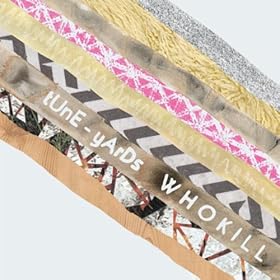
Tune-Yards - W H O K I L L 

A huge record of amazing hooks, wild vocals, and funky musicianship.  Merrill Garbus is a force of nature.

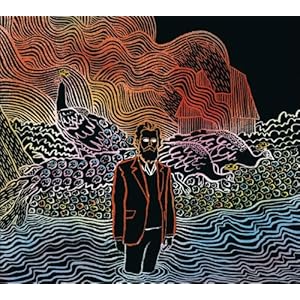
Iron & Wine - Kiss Each Other Clean

Sam Beam gets around to leading a band, and the results are airy, sparse and hauntingly beautiful.  Already capable of writing a perfect song, this record displays perfect arrangements.

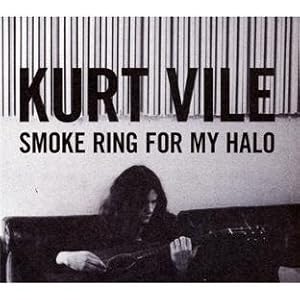
Kurt Vile - Smoke Ring For My Halo

Kurt Vile is a master of economy of language and chords.  A supremely honest, personal record, Kurt manages to pull out emotion of thin air just by twisting syllables around.

The Lonely Island - Turtleneck & Chain

I listened to the title track so much that there's no way it's just a joke.  "Sweater on turtle with the neck on PUFF"

Marnie Stern - Marnie Stern

My yearly foray into the craziest music imaginable.  Marnie Stern holds it down with insane guitar work while Zach Hill displays the fastest, most precise drumming heard all year.  It's somehow catchy, too.

Bright Eyes - The People's Key

The most complete statement of any record on this list.  This album rocks, creeps, philosophizes, soothes and then rocks again. 

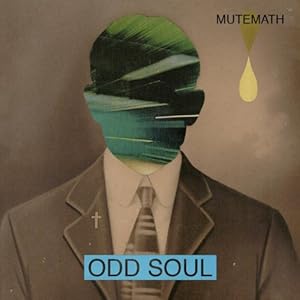
Mute Math - Odd Soul

Nothing more or nothing less than a sick rock album.  Guitars, drums, and vocals all set on fire, put into a blender and shoved into a freezer.  Then you lick like a Popsicle.  That's what Odd Soul is.

TV On The Radio - 9 Types Of Light

 It's hard to explain why one likes TV On The Radio, it's just so unusual, and it all just works somehow.  All their stuff is really great, and this is no exception.

Twin Shadow - Forget

A one-man-show, reverbed out synth pop album.  It's just really nice to listen to, all the songs have a unique stamp that is memorable.

Monday, December 12, 2011

Mixing Drums - A Guide

Steve's Guide To Mixing Drums - www.drum-studio.com
Intro:
As with anything related to music, audio, and making records, there is no ONE way to do things, but I felt that it might be helpful to have this information out there.  I'd advise anyone mixing to use this as a starting point, and from there it can be tweaked and adjusted to suit the sound you're looking for.

Overview:
I typically use 11 microphones to record drums --
2 Kick Drum mics -- one inside the drum, one outside
2 Snare mics -- one over the top head, one under the bottom head
2 Overhead mics (Left and Right)
2 Room mics (Left and Right)
3 Tom mics -- one for each of the 3 toms I use

Record Levels:
I record everything, for the most part, to an optimum volume level -- meaning that all the drum mics are recorded as loud as they can be without clipping or distorting.  Naturally, though, when I'm not playing a drum, it's mic's response is very low, and only when I hit the drum does it go up to it's desired level.  This allows for a uniform sound from the get-go.  In fact, leaving all the drums at 0dB (pictured), is not a bad sound at all, it's just not as clean as it can be.


Panning:
For almost all recordings, I leave the 2 Kick mics and the two Snare mics in the dead center.  The two Overheads go 100% Left and 100% Right respectively, as do the Room Mics.  The Toms get spread out from left to right, Tom 1 being 100% Left, Tom 2 being about 50% Left (or even center), and Tom 3 being 100% Right.  All of these pan settings can be adjusted in literally dozens of ways, but it seems to work well for me, most of the time, to have them this way. 

Mix Levels:
For a typical, balanced drum sound, try out these volume levels.
Kick 1: 0dB
Kick 2: -4dB
Snare top: 0dB
Snare bottom: -6dB
Overhead Left: 0dB
Overhead Right: 0dB
Room Left: -7dB
Room Right: -7dB
Tom 1: -2dB
Tom 2: -2dB
Tom 3: -2dB


EQ:
EQ (Equalization) is the type of post-production that I use the most, and along with compression, is the only plug-in I usually apply to my recordings.  There are many different ways to EQ a drum mix, so I'm just going to give you my typical settings and the reasons behind them.

Kick 1: This mic picks up most of the body ("boom!") of the kick drum and doesn't need much low end added to it to make it sound big.  I tend to get rid of some of the mid-frequencies though, to clear up the sound (you'll notice that I do away with many of the mid frequencies).  A typical EQ curve looks something like this:


Kick 2: This mic gets also a lot of low end, but picks up more of the kick pedal beater hitting the head, and produces a lot more "snap!" than Kick 1.  I usually EQ this channel to accent the high end properties and find that it blends well with Kick 1 this way:


Snare Top: This mic picks up the sound of the stick hitting the snare drum, and should give an overall representation of what the snare sounds like up close.  I tend to find a "sweet spot" in the high frequencies that allows the character of the snare to really pop out, while getting rid of some of the muddiness of the mid frequencies:


Snare Bottom: This one is much trickier and really depends on the song, you can either have too much high end, or not enough depending on how the song sounds around the drums.  Or you can just leave it be, this is a good one to experiment with, without much input from me.

Overheads: Both overheads will respond slightly different to the same EQ, but there's a typical rule that I follow that has always suited me nicely...gently lift up some of the high end, and gently get rid of some of the mids:


Rooms: Like the overheads, the room mics shouldn't be treated exactly the same way, but they're usually very close together in their EQ'ing.  Try getting rid of some high end, and accentuate the mid-low end.  This fills out the kit nicely because there's so much high end and so little mids in the rest of the kit, that adding some into the rooms makes for a nice balance:


Tom 1: I have pretty specific ways of making my toms pop out, and you'll also notice that getting rid of mids, raising high and low ends is the key to this:


Tom 2:


Tom 3:


Compression:
I tend to limit the amount of compression I use, and always to try to apply gently when I do.  The reasons for this are:
- The drums will likely be compressed again sometime in the mixing/mastering process after I've given up control of it.
- Compressed drums typically sounds better by themselves but lose something when mixed in with other instruments.
- I think over-compressed drums sound dated and genre-specific.
With that being said, I do typically compress the Room mics and the Snare top mic.  There's no intellectual reason I do this, I just think it sounds better that way.  The overheads certainly can be compressed as well, but I avoid that unless I feel the drum mix needs a little extra "pump".  I almost never compress the kick mics or tom mics; I just do not feel it's required for those, most of the time.  I personally do not spend too much time with specific compressor settings, because my mix is hardly ever the "final mix," I just do what sounds good to me at the time.  This usually involves cycling through presets until something clicks in my ears.  I'll leave it to mix engineers of the whole song to decide how much or little compression to add to my initial ideas.

Reverb:
Reverb is certainly something that is used a lot on drums, but it's so specific to the song that it makes no sense to discuss it at length here.  At best, the drums I record don't require reverb to sound "good", that is something I am quite sure of.  But if you did want to add reverb, I would recommend adding it to the Snare bottom (for a reverb'd snare sound) and to the Room mics (for the illusion of being in a bigger space).

That covers it for my thoughts on mixing my drum set.  Good luck and don't be afraid to experiment!
-Steve Riley, drummer (www.drum-studio.com)

Tuesday, May 31, 2011

Silverchair's Break-Up: The End Of A Strange, Inspirational Rock & Roll Tale

www.drum-studio.com
In the U.S., news of Silverchair's break-up might seem particularly unappealing as a rock and roll story.  For most, Silverchair must have appeared to be lingering in a post-grunge haze, occassionally releasing a lackluster album every few years to satisfy an ever-dwindling fanbase of misguided nostalgics. That is, of course, assuming that someone actually remembered who they were.  If they were remembered, I'm sure there would be a near-buried image of a music video of with a guy who looks Taylor Hanson, and a man in a pig-mask, for some reason.  The song in that video would probably rock, but wouldn't seem significant now.

The problem is, while they were once contemporaries of Bush, Hole, Live (and other monosyllabic post-grunge bands), they had evolved significantly since their early fame, and had established a new present for themselves; where nostalgia and Greatest Hits tours weren't necessary.  True, they seemed destined for an early death: they were cursed with an explosive early fame, based on a decreasingly-popular style of music and teenaged good-looks.  Their first album, Frog Stomp was a bonafide U.S. hit, but their next two Freak Show and Neon Ballroom tested the fatigue of the public.  Next came singer Daniel Johns' public bout with anorexia, which didn't mix too well with the jock-rock wave that was sweeping over the States, where Staind, Korn and Linkin Park assuming the role of hard rock's new tortured artists.

A live Silverchair show around 1999 would have revealed a talented, yet tired band with nowhere to go.  Their best loved songs were from their first batch, and the newer hits didn't have the swagger and youthful appeal that they should have had.  Even loyal fans wouldn't have expected a rebirth of the band after that point, but they were given new life by an unlikely ally: the piano.

During a yearlong hiatus 2000-2001, singer Daniel Johns tackled his issues with the gentle touch of songwriting via piano.  Working on piano gave his songs a richer sound, a complex blending of tones, keys, modes and motifs that the rock guitar can rarely emulate.  In addition, the writing style gave way to a fresher approach to the rock guitar that still was a basis for many album tracks.  On Diorama, the new songs showcased a hugely ambitious sound, complete with full orchestra arrangements, numerous key changes, wild melodic and harmonic shifts, and a vocal prominence that belied their previous work.  Songs such as "Across The Night," "Tuna In The Brine," brought a sophistication that was completely unheard of for bands of their era.  The album ends with the gorgeous "After All These Years", a piano-vocal outing that has the touch and twists of a McCartney ballad.  Aside from a few lyrical missteps, the album is as enjoyable and inspirational today, 10 years after it's release.

At this point, the band live was a force of nature.  Daniel Johns wielded the presence and confidence that would propel the band further down their new path.  The rock songs rocked harder, his voice was clear and confident, his piano playing was expressive and often improvisational; the band had truly transformed certain disaster into new life.

Their next album, Young Modern, combined much of the pomp and orchestral aspects of Diorama, with several razor-sharp pop-rock songs.  Songs like "Straight Lines" were tight, excellent efforts, designed to be catchy, yet unpredictable.  The album also revealed their most ambitious song to date, their "Thieving Birds" suite, a whip-smart arrangement of Beach Boys-esque pop and flowery baroque obsessiveness.  The album failed to catch fire in the U.S., but was well-received by fans and critics worldwide.  The live shows that followed this album were monstrous.  The band now had more than enough material to play to their "new era" fans and didn't have to cherry-pick their old hits to engage their audience.  I remember hearing a complaint by a concert-goer after seeing them at this time, who loudly moped, "They didn't even play Tomorrow!"  That fan didn't get much of a response, as it was clear most of us weren't at all interested in watching the band dig that far back for nostalgia's sake.  For all of us at the show, the current Silverchair was the one we really wanted to see.

Now that they've officially called it a day, it's comforting to know that their departure wasn't a tragedy, but a dignified resignation by a near 20-year band.  The may have not reached the heights of rock royalty, but their unusual career path and frequent successes will surely read as an interesting chapter of music history.

Friday, May 27, 2011

The "Ultra-Low Price" Solution

This Tuesday, musicians and record labels rejoiced at the sight of a long-forgotten phenomenon in the music industry: a stampede of fans buying music!  That's pretty much...unheard of!  It's like waking up one day and hearing they got Bin Laden or that Lance Armstrong does steroids.   Completely bizarre stuff.  

But there was a time when major artists' albums would prompt midnight lines at record stores on Monday nights, waiting for important Tuesday releases.  Pre-ordering a CD was, at one time, a surefire way to make sure that on Tuesday, your copy was securely waiting for you on your doorstep.  Yes, there was actually a time when consumers were so gungho that they were worried that they might not get their own copy on the first day!  Well, that's not really the case anymore; the word "copy" doesn't even make sense.  It's just digitized information, 16-bits a second at 44,100 hertz.  That usually amounts to about 100MB or less for a full length album, and that's a negligible amount by today's high-bandwidth standards.
 
But alas! when Lady Gaga's 2nd full-length album Born This Way was released, and there were hordes of fans beating down Amazon's virtual doors to buy the MP3s.  Amazon's spokesperson said that it was, "the largest amount of interest we have ever seen for an album in just one day."  The traffic was so heavy that Amazon couldn't keep up, and had to re-tool and try again the next day.

The only catch to this monumental re-birth of the industry was that the full album was being offered for 99 cents.  That's the price of gum; the cheap gum, not that fancy Orbit kind.  It's roughly the price of one-quarter gallon of gas; about the amount you'd need to drive a Vespa to a Best Buy to buy the Lady Gaga CD for $17.99. 

By the way, the background of this $0.99 deal was that it was a promotion for Amazon's MP3 store to place itself as a legitimate competitor of iTunes, and it isn't the permanent price of any full album in the store.

So, being the perpetual optimist that I am (uh), I'm inclined to see what's genuinely good about the Ultra-Low pricing solution.
First off, paying 99 cents at a reputable store like Amazon is possibly easier than getting it for free via Mediafire or torrents.  With those types of sources, you have three downsides: It's illegal.  It's immoral.  It can take a few extra seconds or minutes to find the exact item you're looking for.  If you can go to Amazon and legitimately purchase an album for the roughly the price of a pack of Trident, the cost-benefit analysis will probably find you saving more by taking the "Legal, Moral, But-Still-Convenient-Enough Path."  And, hey, 99 cents might not be much, but it's better than nothing.

And while "better than nothing" doesn't seem like a very lofty goal, I don't have a whole lot of faith that there will someday be a situation where the majority of people will pay $17.99 for an album, or even $9.99 for that matter.  Piracy is too easy and convenient, and will likely stay that way.  So, isn't it logical to try to beat piracy at it's own game?  Make it easier and more convenient to purchase.

Secondly, it would force a sense of economy on the music industry.  The industry could come out more trimmed-down, more artist-focused, and with less side-bar players taking a percentage (because how many ways can you possibly split-up 99 cents?).  Even though the music game has slimmed down considerably since the pre-2000's, it still has fat left to be burnt off.  Maybe the loss of players such as PR firms, consultants, low and mid-level managers, would be detrimental to the overall health of the industry, but it's hard to argue that there's really anything to make the music industry "more dead" than it is right now.  It was quite arguable, in my opinion, that for the music industry to ever grow again, it needs to shrink considerably first.

But is there really enough meat on a $0.99 bone to support the costs of making music?  Probably not.  There are still studios with $500,000 mixing consoles and $500,000 worth of other microphones and instruments, and people with decades of experience in how to make great records.  It still takes weeks, if not months, to properly produce an album that meets the public's standards.  How is a million dollar facility expected to be used for dozens of days, to produce a product that is only worth $0.99?  How is a record label supposed to afford to pay for that cost when they know they're only going to make pennies off of that product, even if all goes perfectly?  How are young bands, who are currently paying $500 per month for a rehearsal studio, supposed to justify their hard work for something that is valued at about 1/3 the price of a can of Red Bull?  Is the demoralization going to be worth it?  Will it create a situation where, even the world's finest songwriters, need to work nights at the grocery store to make ends meet?   Or, will music meet the fate of other types of fine art, where high-quality music will be elevated to an exclusive delicacy, with wealthy patrons footing the bill?  Or can we all just think to ourselves, "we can do this!," and remember that the 99 Cents Store is really not so bad!


Monday, March 7, 2011

Overly Critical in the Internet Age

I think we can all remember a time when there was such thing as “an opinionated person.”  Those people who seemed to have very little figured out, but they were trying.  They formed solid opinions, stuck to them, defended them, and often fought for them.  Others floated by with the comfort that it wasn’t important to judge things like music, movies, comedy and other arts.  There was a clear distinction of people who enjoyed that kind of confrontation, and those who chose not to get involved.   

NOW, in a sense, that distinction is completely gone.  Opinions no longer require arguers to look each other in the eye, and complete strangers can argue without the burden of context or the personal history of their opponents.  Critical argument in the Internet age can take place at the drop of a hat, in the Comments-section of an article, on Facebook with a friend’s friend, or on a message board with like-minded fans.  Confrontation can be instantly provoked, and within moments, people have reached conclusions that are as hard as cement, and formed with mere seconds of thought, and they are published publicly.   With the commentary established, these comments can be read by untold amounts of people looking for information, despite the fact that the author could very well have cooled to the topic moments after making the judgment.  These comments can very well be viewed as intellectual litter, scattered by millions of authors in moments of careless abandon, provoked by impulse, and fueled by the desire to feel heard...or possibly as an attempt to transfer frustration or anger onto a topic rather than it's real cause.  But readers are nonetheless subjected to it, and it can often sour others before anyone’s even had a chance to examine the subject for themselves.  It’s a very curious phenomenon, and something that surely has not been experienced in any other way in history:  The dissemination of public information, written by the public, and read by the public, in one shockingly instantaneous motion.

Let’s look a particularly normal example, pulled from a site called AV Club, a collection of music/movie/book/TV reviews and commentary that I find frequently interesting.  This conversation is happening as I am writing this, and will surely be done being discussed by the time anyone reads this.  The subject: The bands Mumford & Sons, and Edward Sharpe and The Magnetic Zeroes are going on tour on vintage train cars through the American Southwest.  The tone: this is a silly idea by goofy bands.   My take is that it is a silly idea, but a fun and novel one.  Surely this can’t be a bad thing, in my opinion.  About halfway through the comments I find this:

Ed Sharpe is pure fauxhemian crap. He was actually in a failed spaz punk band called Ima Robot before he decided to hop on the bearded folky indie trend that was happening a couple years back.

Let’s break this down a little bit.  First, “Ed Sharpe is pure fauxhemian crap.”  This assumes that the words fauxhemian is a meaningful term for “phoney bohemian.”  I suppose that Edward Sharpe (which isn't his actual name, but hey...) is a phoney bohemian.  Edward is likely to be seen walking around barefoot despite the wide-availability of footwear, sings songs that seem drawn from equal parts 60’s folk and depression-era country music, all the while licensing these songs for use in TV car commercials.   In his case, “fauxhemian” is actually a cleverly applied title.  But what’s the problem?  The songs aren’t offensive to any sort of standards, they’re well performed and there’s a delightful back-and-forth of female/male vocals.  Is that a problem?   Is fauxhemian-ism so rampant in the author’s region that just the mere mention of that evokes a sense of dread?  Is there a well of personal experience of these types of people that leaves the author no choice but to insult the band based on this perception?  I suppose that’s possible, but seems unlikely.  Besides, it’s music.  Edward Sharpe and The Magnetic Zeroes is just a band, shouldn’t they be judged by their songs?

The second critique in this blurb refers to his past in a band called Ima Robot, which is a band that I’ve heard of but have never listened to.  This time, the assumption is that this band failed (despite being famous enough for me to have heard of them) and because of that failure, Edward Sharpe formed a band in the red-hot scene of bearded indie-folk bands.  Because bearded indie-folk bands so incredibly successful right now.   Being bearded and in an indie-folk band is like owning a money-printing machine, in this author’s opinion. 

With this we have reached one of the most common insults leveled at musicians and artists in the history of the Internet:  “The artist is just doing this because ____________.”  This criticism can be pointed at anyone, for any reason, and can shoot down any creative effort in a heartbeat, and 99 times out of 100, the critic will never have to answer for this.  Why?  Because it’s an opinion that can’t be proven wrong, even if the artist himself insists that it’s not true.    In this case, Edward Sharpe formed this band because he wanted to trick everybody by playing a popular style of music and make a bunch of money off of you saps.  Ima Robot was his real musical style, and The Magnetic Zeroes is his cop-out cash-grab.  And in an instant, the critic has completely shot down this whole band’s past, present and future.  The argument is now, “This isn’t even a legitimate band!  This effort is completely fake and manufactured to make money!  Anyone who enjoys this is being fooled!”  And I don’t want to sound overly sensitive, but that hurts.  That’s an argument that’s so incredibly devastating to its target, but it doesn’t have be proven, and anyone can read it and believe it’s true without any further reasoning.   As a member of many bands in the past, I can just simply assure people that all bands are manufactured to a point, but every band that writes songs needs a level of sincerity in order to complete their mission and create an album.  To assume that a band like Magnetic Zeroes exists just a moneymaking operation would be to dismiss thousands of donated man-hours, massive quantities of personal sacrifice and huge creative risk.   Making an album is not something to be scoffed at as a purely one-sided affair, it’s too complex, involves too many voices and too much input to be dismissed so simply; yet it’s shockingly common to see it done.  Take a look around the internet, and marvel at how easy it is for people to reduce the lives, work and efforts of untold millions of people down to one snide comment or two, and ask yourself why it’s so necessary for people to do that to one another.   I suppose that’s not my area of expertise, so I’ll leave that to the sociologists to figure out.  In the meantime, let’s concentrate our critiques on things that we can see, smell and hear, and leave the motivation-bashing out of it for a while.  I think if we all decided to scratch with our fingernails rather than slash with a sword, we might realize that things we dislike aren’t so sinister and evil, and merely just someone else’s take on things.  And if they still don’t hold up, we can simply move on to something that will.

Monday, October 11, 2010

"The Social Network" and Young Americans

“Harvard students are looking to invent jobs instead of finding one.”
The Social Network

When I first read some review headlines for the movie, The Social Network, I saw many references to it being a historical bookmark of the past decade.

At the time, I didn’t understand this concept, and wondered how the Facebook movie would live up to this. But after having watched the movie, it seems pretty obvious.

It spoke a great deal to what’s apparently happening in the psyche of young, intelligent American kids, and their struggle to find their own place between alternating worldviews.
The American Dilemma
One common American worldview espouses traditional workplace values, the corporate job, the construction job, common trades.

The other, more alluring path is to be apart of the new economy. Where the Internet, clean technology, and soon-to-be-innovations promise a new American golden age--where young people’s fresh ideas would take root and bring vast fortunes back to America.

This is the idea: China and India are smarter and harder working…so what? Doesn’t matter! We’ll just go open up a box of Awesome and invent cool shit and they are happy to just assemble the awesome new products that we’re licensing to them. Then we’ll take those well-made, cheap products, and sell them to ourselves, and while we’re at it, you guys can all buy one too, and we’ll all get paid.
To be honest, I love that scenario.

That’s probably not going to happen, though. We’re outmatched, outmanned, and they’re getting wise to our little plans, and going ahead and just buying America so that our awesome work will just be theirs. Ok, maybe that’s not going to happen either. I’m not a scientist.

The traditional path, the corporate job, the common trades seem to be the likely path for many young people, but they’ve lost so much of their appeal. I believe that young Americans are spoiled, overstimulated, under-focused, selfish, and shortsighted at the very core. I know that seems harsh, but it’s kinda true. There’s positive traits mixed in there, but no need to mention those now.

We don’t want the 9-5 grind because we’re too smart and talented, we can’t do a task effectively because there’s something cool on the computer to look at, and did I mention that I’m too creative to work in an office? Right. The problem is that none of that is true. Multi-tasking on a computer doesn’t mean you’re hand-eye coordination is superb, doing a job in 50% of the time doesn’t mean your boss wants you to 50% of the time “off”. Being told you’re creative doesn’t mean that you are creative, liking music doesn’t mean that you should work in music, liking video games doesn’t mean you can design them, using Facebook doesn’t put you in a position to invent the next big one.

There are so many common misconceptions in young America that don’t seem to be any closer to being resolved than they were during our childhood. The misconception that being clever, smart, better than others, are rights that one is born with. That hard work is less valuable than creativity. That being normal, being pragmatic is less valuable than following your muses. It’s sending people down a track that doesn’t seem like can hold the weight. More and more young people are going to college, yet more and more of them are majoring in things that have no career attached to them. In other words, we’re “following our dreams” and now we’re lost. Our parents have near crashed the economy completely with pure ignorance, have squandered in mindless materalism, disconnecting their own families for no real reason. We have no direction to take from them. We’re on our own out here, trying to figure this out. The ancients speak against us, the contemporaries speak against us, but we see their failures too, are not willing to repeat them. In other words, we’re choosing our own failures, and attempting to write our own successes. Preferably in a way that exceeds anyone else before us. We want to have more fun, be richer, and never get old.

And here we have Mark Zuckerberg (founder of Facebook and subject of The Social Network), having tapped into a shining example of how to profit the new economy. It’s a perfect encapsulation of what this whole thing can be, because it’s so contradictory. The same contradiction that confuses young Americans has been turned into the business itself. The time wasted, the time expressing individuality, the time spent thinking about oneself, and one’s purpose in relation to friends and family, held together for long enough for an advertiser to sneak in an impression. There is no programming required, such as in TV and radio, it’s merely the time spent illuminated on one’s life, being reflected back at you with a subtle consumer message attached to it. It’s the message of the consumer, it’s the message of the person, give me time to exercise my ego, and I’ll let you sell me something. The person creates the world that’s important to them, and it’s viewable by others. That’s not the same as needing pipes for plumbing, or food to eat, but it’s somehow become a necessity that generates income as such.

So, what for all the others?
There’s no guarantee that there will ever be more innovations to be made, we just have faith in the idea. Much more faith than our parent’s gods could ever require. There is no guarantee that young Americans will continue inventing things that make money, to replace the failings of our parents with success. But it’s the hope that might be just enough to outdo our competitors.

Friday, August 20, 2010

R.I.A.A. + Net Neutrality vs. The Public


"Net neutrality regulations could, if the music industry gets its way, usher in more Internet surveillance and a crackdown on suspected pirates. This week, just about every music trade group called for broadband policies--which could include a new federal law--that would "encourage" Internet providers to crack down on suspected piracy by their customers. "The current legal and regulatory regime is not working for America's creators," the groups, including the Recording Industry Association of America (RIAA), said Wednesday in a letter to Google CEO Eric Schmidt. "Our businesses are being undermined, as are the dreams and careers of songwriters, artists, musicians, studio technicians, and other professionals."

The ironic thing about the RIAA's claims is that they themselves have been "not working for America's creators" for some time now. Sure there's an element of their business that still does cater to the artists at the top, that ensures that there are plenty of cross-promotional opportunities for a hand-full of their acts to take advantage of. Sure, the artist-of-the-moment does have an array of things to look forward to, courtesy of their record label: TV documentaries about their lives, corporate sponsorships from major companies, mainstream magazine covers, access to designers and managers who can help launch a clothing or fragrance line...

Unfortunately none of that works for anyone but top-tier mainstream celebrity-artists. Long past are the days of diversification in label's rosters...long past are the days when a major label would invest time and clout in groups based solely on their potential. The reward vs. risk quotient is irreversibly skewed... because they're terrified. Companies that invest in art can't be terrified, they have to be fearless and bursting at the seams with uncommon foresight. Ask yourself why Eminem's last few horrible albums are still a huge deal...the answer is simple: because there's no one to replace him.

The RIAA and it's member-companies waived their white flag in the internet fight around 2001, when Napster proved more of a foe than they cared to match wits with. Sure, they threw lawyers at the problem, but at no point did they actually choose to fight economics with economics. They chose to fight economics with lawsuits. They just gave up, and took up the role of victim/complainer. It doesn't take a marketing or economic genius to figure out that playing the role of "victimized corporation" doesn't help you sell products, it makes you more susceptible to theft. People steal from people who have no defense, people especially steal from those who they find pathetic, and they double-especially steal from those who they feel dont deserve what they have. The RIAA and it's members have lost so much respect in the past 10 years, that their reputation is actually poison to the industry they represent. Artists and bands now have to contend their music with an ever-increasing public perception that "the music industry is not worth supporting."

So, here in 2010, we face a growing "threat" of internet traffic regulation, where our service providers can potentially spy on us and crack down on our illegal tendencies. Naturally, the RIAA is for this, because it can possibly help them, without a personal cost to them. If this goes down, Google and Verizon will take the flak, not the RIAA. They can just speak out in favor of this, and then they may reap some benefit somewhere down the line. Again, it doesn't take a marketing or economic genius to know that this, in no way, will fix their business. We're a long, long way from Verizon handing out "automatic infringement tickets" for a detected illegal download...like a red-light camera sending you a traffic ticket in the mail. To me, that's the only way this could have any measured effect on illegal downloading, because how many Verizon employees could potentially monitor their user's activities? It would have to be automated...and even then, the legal ramifications of that system would be staggering. Something tells me there's no real legitimate desire for Verizon, Google, et al. to actually engage in several million legal transactions with their customers, customers who can leave their services on a whim.

Music will continue to be on the downloading chopping block until it's too much trouble to get. Inconvenience is the antidote for internet thievery. Make hurdles and people will choose to not jump. Manufacture empty threats, and people will not only recognize them as empty, but they'll also be more inclined to not respect future threats. And if a threat fails to instill fear, the threat is useless. RIAA has no ammunition at this point, yet they keep pointing the gun at millions of people thinking that they'll be scared. Moreover, what's the good of threatening your consumers? Art exists at the permission of the public, not at the permission of it's investors, and I think the RIAA is in dire need to understand that, and cater to that fact.

Friday, July 16, 2010

music school confidential

Ah, the "going to college for music" concept.  One of my favorite, and least favorite things to talk about, depending on who's got the opinions.  Sometimes the conversations are oddly reverent, other times they are pointless pissing contests, and often they can become overly prejudiced and harsh against whichever side you're not on.  Where do these feelings come from?  I'll see if I can answer that later...

Let's just jump ahead to the end and say that going to college for music is something to consider.  There's no ultimate argument that trumps all arguments, unfortunately.
--
I think 95% of musicians would agree that being a musician is a trade.  Even as a hobby, it's a trade, like knowing how to fix cars or how to network computers.  It takes some understanding to get started, some rules to follow, and it has a vocabulary and vernacular that comes with it.  With practice you get better, and maybe one day you'll be so good that you can charge people...as a musician, that likely means getting paid by a listening audience or by a session producer. 

So it follows that there are schools that teach music, in a similar way that you'd teach another trade, with:
Hands-on training
Group sessions
Instructors from the field
One-on-one lessons
Books on procedure, practice manuals, etc.

But music is not JUST a trade, it's also an art-form, and that's where it can diverge drastically and muddy up the whole idea of why exactly music colleges should exist.

The skeptic will ask: "How can you teach something that is designed to impact culture, emotions?"

"What is there to learn from a teacher that you can't learn by listening to records?"

"How can you teach someone to improvise?"

I think the answer to those questions is simple:
Not all music serves the purpose of being meaningful to us emotionally.  A lot of music exists for commercial, educational, supplemental purposes.  And those types of music have to be written and recorded by someone...someone who can do it fast, well and cheaply.  The breadth of music knowledge that it takes to be able to do these things is something that is taught in music school.  Music also needs to be taught to others, and so training music teachers in the nuts and bolts of music theory is also a necessity.  And believe me, there's enough music theory in existence to keep you in a classroom for a long time.

I mean, those above two purposes seem like fine reasons to attend music college...at least they do to me.  But that's not where it gets contentious -- these are not the reason that the whole idea of a music college is a turn-off to so many people, and a giant turn-on for so many people.

There's an allure to a music college that I think can be very intoxicating to young adults, who are fresh out of high school or in their 20's.  It's like, training to be an astronaut.  The job itself is so fucking awesome that even just the idea of being THAT when you grow up is enough to drive people into a frenzy.  The perks of being a musician are:
Fame
Sex
Cash
Power
Jewelry
Cars
Bitches
Owning a Professional Sports Team
Planes
Boats
Entourage

yep.  All of that can and will be yours if you go to music school.  Because then you'll be a trained and ready, lean-mean professional musician.  *the crowd cheers just on the mention of your name*

Yeah, something like that.

Keep in mind that when I went to Berklee College of Music as recently as 2004, they didn't really even require an audition to get into the school.  I did because I tried out for a couple scholarships (got one) and they saw me play during that.  But not everyone had to.  Their checks cleared.

So if you're not dumb enough to think that untrained, untested 18 year olds are likely to be future rockstars or rap moguls, we have kind of a problem.   Maybe because I live in L.A., but there are just massive amounts of untrained, untested kids out of high school (or likely, fresh off the heels of their first job, that taught them that working for The Man is a sucker's game) that pursue creative arts in college.  Music being one of the most popular, despite it's ever-declining revenues.

I can flash to scene after scene of conversations at parties where people pursuing music-related career fields had any particular knowledge of the industry, their instrument, or even more than just a passing enjoyment of music.  The mere enjoyment of music has somehow morphed itself as a reason to be working in the music industry.  I honestly thought that everybody liked music.  Like 100% of people, worldwide.

And I dont want to sound too harsh or down on people who are following their dreams, I just think there's a massive disconnect from the industry itself and the army of colleges and trade schools that claim to be it's gatekeepers.

It truly is a fault of the music schools of the world to assume the role of a gateway to the INDUSTRY of music.  It is a gateway to  KNOWLEDGE of music.  That's a gigantic distinction for me personally.  I think that if that fact were more apparent, we'd have a lot less failed music career-carcasses floating around the streets of LA and NY.

Over the years, there has been a steadily increasing branding of colleges that promise careers in the music biz.

Berklee
Full Sail
MI (Musicians Institute)
Academy of Art
USC (here in L.A.)

Berklee went from a "boutique" jazz haven in 1945 to it's 2010 image as a dominating name in music education.  Offering the most expansive book and online presence around.  Berklee Online classes are now very popular, and very ubiquitious.

M.I. is plastered around Los Angeles like Coca Cola ads.  They're much more blatant in the idea that going there is a "must" for relatively unskilled aspiring musicians.  Despite the fact that private lessons through amazing local teachers are no more than a phone call away, and at a fraction of the cost of M.I. tuition.

Full Sail and the dozens of other recording schools are relying more on the hip hop community to keep enrollment up.  Many hip hop lovers-turned-creators have no real instrument/voice training that would qualify them for an M.I. or Berklee...so "recording schools" pick up the slack. 
Recording schools offer training to DJ's, beat-makers, sound-scapers, and other non-instrumental audiophiles to pay $25,000 per year to learn their craft better.


And I'd say these schools do a hell of a job, at times.  I could go on for ages about my mixed-bag Berklee experience, but that's for another time.  Point being, they're not duping people in the education they provide, the instructors are qualified and they're accredited.  What I find to be a problem is that they play off people's loves and passions for music.

What they offer is so incredibly expensive, implying that it's the cost of an education that will take you far...but every musician knows that how far you go has nothing to do with which school you attended, or if you attended a school at all.  It just doesn't.  There's a laundry list of things to be good at to be a successful musician, and those are things that you can't learn in a class: dedication, raw talent, persistence, etc.

And we musicians have a cross to bear with this as well.  A pretty huge one.  There's too much weight given to schools in the musicians' world.  I think they serve a purpose and can teach a great thing or 2.  But to use your schooling to justify your talent is erroneous, as in thinking that you're a good musician because you went to a music school.  And it is equally erroneous to use your lack of schooling to indicate your innate raw talent, as in thinking that your knowledge was gained completely by yourself.  Neither one of these viewpoints is valid, there are too many conflicting examples to make either argument.  People are just different, a few months/years at a music school cannot teach them to be the same.

From this point on, I would love to see this topic approached from this point of view:
Music schools are something to be considered as an educational option
One cannot purchase a career in music from a music school...no matter how appealing that sounds.

Thanks for reading and be on the lookout for more blogs on this topic.

For more music and drumming stuff visit:

Steve's Drum-Studio.com | Music Articles | Drum Tracking